
Lingering Drought May Alter Tactics During Upcoming Deer Season

buck

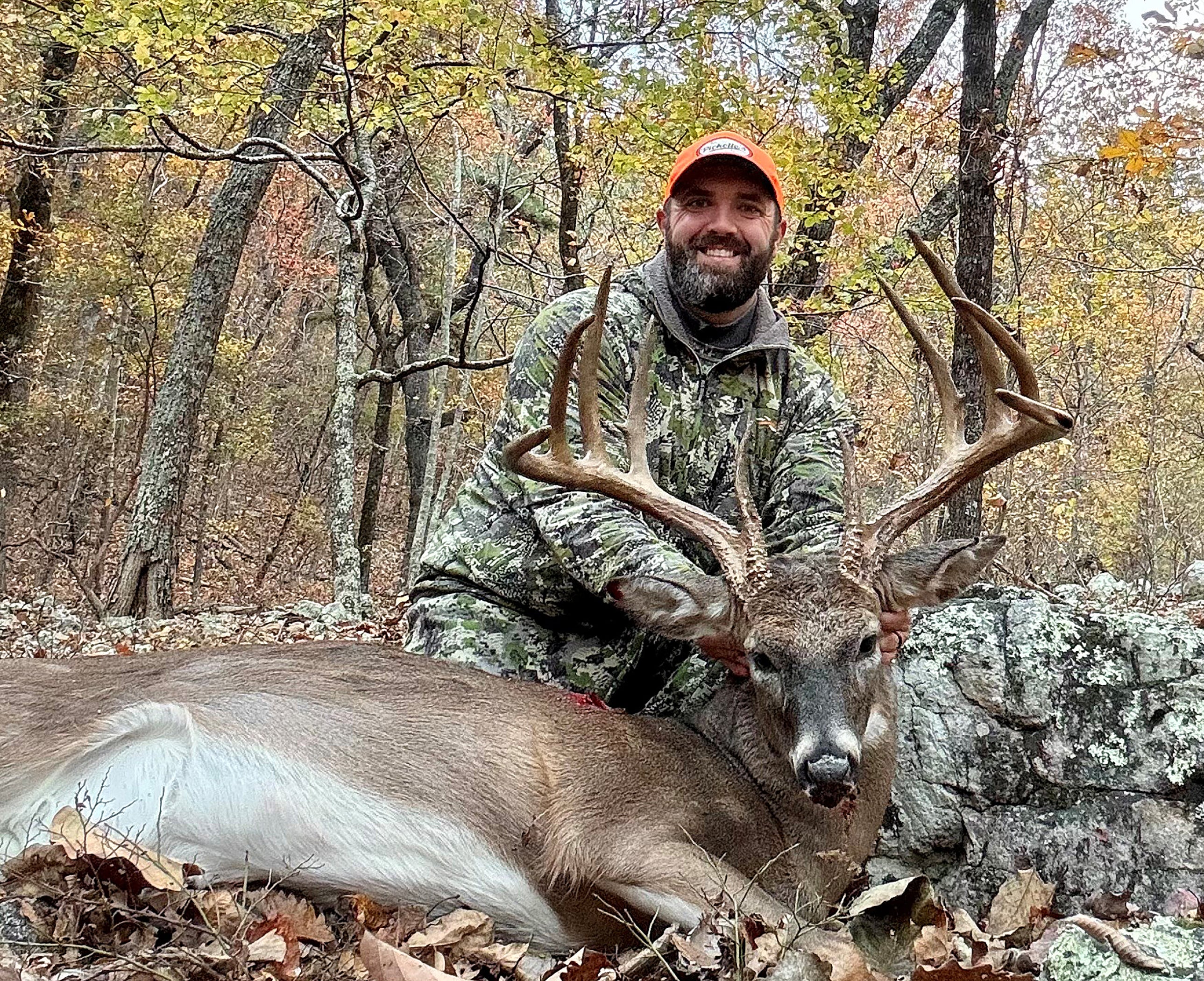
Josh Crocker took one of the largest bucks, 187 1/8 net score, in Alabama last season in Talladega National Forest. Photo courtesy of Josh Crocker

By DAVID RAINER, Alabama Department of Conservation and Natural Resources

With drought conditions persisting in much of the state, especially west Alabama, deer hunters may have to adjust tactics when the gun deer season opens in most of the state on Saturday, November 21.

If you’re hunting in the woods, the ground is going to be terribly crunchy, which will eliminate most attempts to slip through the woods in search of deer. It also could mean leaving early to get to your stand to allow the area to settle down before legal shooting hours, which begin 30 minutes before sunrise and end 30 minutes after sunset.

Those who prefer to hunt wildlife openings, which will be easier to get to without much ruckus, may not be productive early in the season according to Alabama Department of Conservation and Natural Resources’ (ADCNR) Landon Johnson, the Wildlife and Freshwater Fisheries (WFF) Division’s Deer Program Coordinator.

“It’s pretty dry in most parts of the state from what I’m seeing and hearing,” Johnson said. “It has affected the food plots – wildlife openings. We need some rain on them. Some people who planted early and got enough rain are okay, but others who planted late maybe didn’t get enough. In those areas with less rain, the food plot seed is likely lying dormant if the birds and small game haven’t eaten it all. A lot of times, we just have to wait on the rain. If you try to replant with a frost coming, it could hurt in the long run. Most of the plots don’t look good until December anyway.”

Johnson said from the reports he’s hearing and what he’s seen on the ground, Alabama will have plenty of acorns for deer forage but not nearly as many as last year, which produced a bumper crop.

“I’m hearing reports of good crops of white oaks, red oaks and other oaks,” he said. “The deer tend to prefer the white oaks the best.”

Hunters in Alabama harvested 204,157 deer during the 2025-2026 season according to Game Check. Of that total, 107,132 were antlered deer, bucks. All deer harvested are required to be reported through the Game Check system, which is most easily accessed through the Outdoor AL app for iPhone and Android devices. Deer and turkey harvests can also be reported online at www.outdooralabama.com/hunting/game-check-and-harvest-record-information or call 800-888-7690.

Despite the less than ideal conditions, Johnson still thinks the upcoming season will have plenty of hunter success.

“Everything is looking status quo,” he said. “I don’t see why we wouldn’t have a good season. The weather will determine how many folks will be able to get out on the weekends, but that happens every season.

“With these conditions, patience is going to pay off in the long run. But that’s the case almost all the time.”
Reese

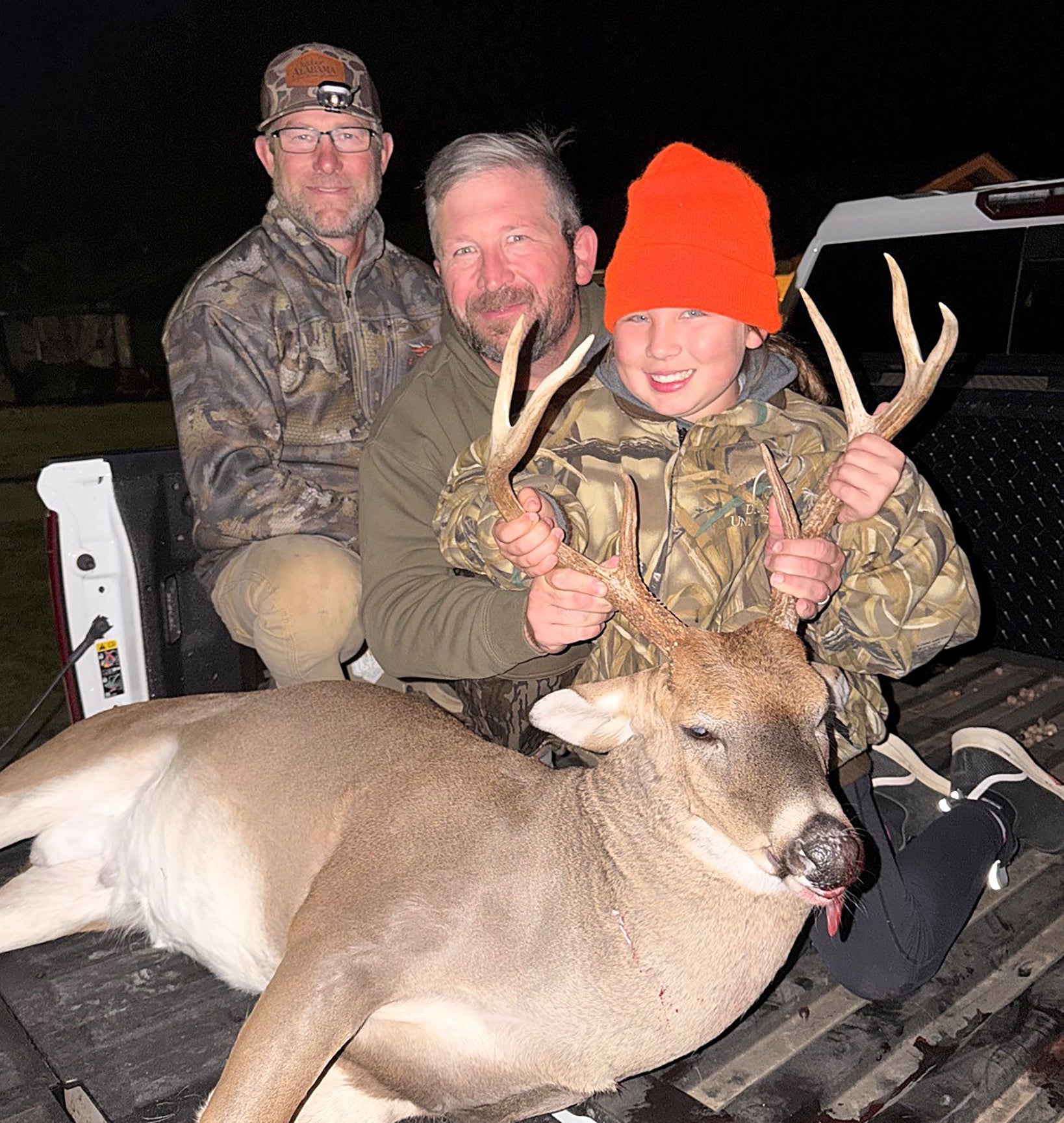
Reese Padilla celebrates bagging a nice buck during youth weekend with her father, Freddy, and uncle, Skip Fields. Photo courtesy of Freddy Padilla

Among those deer harvested last season were numerous very large bucks, which circulated all over social media. 

One of the biggest bucks taken last season was taken by Josh Crocker on public land in Talladega National Forest. That buck scored a net 187 1/8 points. Many others in the 160-170 class were also taken.

Johnson believes the three-buck limit the Alabama Conservation Advisory Board approved almost 20 years ago is the reason hunters in Alabama are harvesting trophy bucks. Hunters are allowed to harvest three bucks during all combined seasons. One of the three must have at least 4 antler points 1 inch or longer on one antler (except for Barbour County). A point is defined as an antler projection of at least one inch in length from base to tip. Main beam tip shall be counted as a point regardless of length.

“We’ve seen some really nice bucks taken from all across the state for several years now,” he said. “When we implemented the three-buck limit, it really positioned us to have larger bucks harvested consistently. We’ve always had large deer in Alabama, but the consensus is the buck limit has paid off in the long run.”

Alabama has a very liberal anterless deer harvest with a bag limit of two per day per person in most of the state. 

“We’re one of the few states that tend to harvest about as many does as bucks,” Johnson said. “That’s good for the overall herd health.”

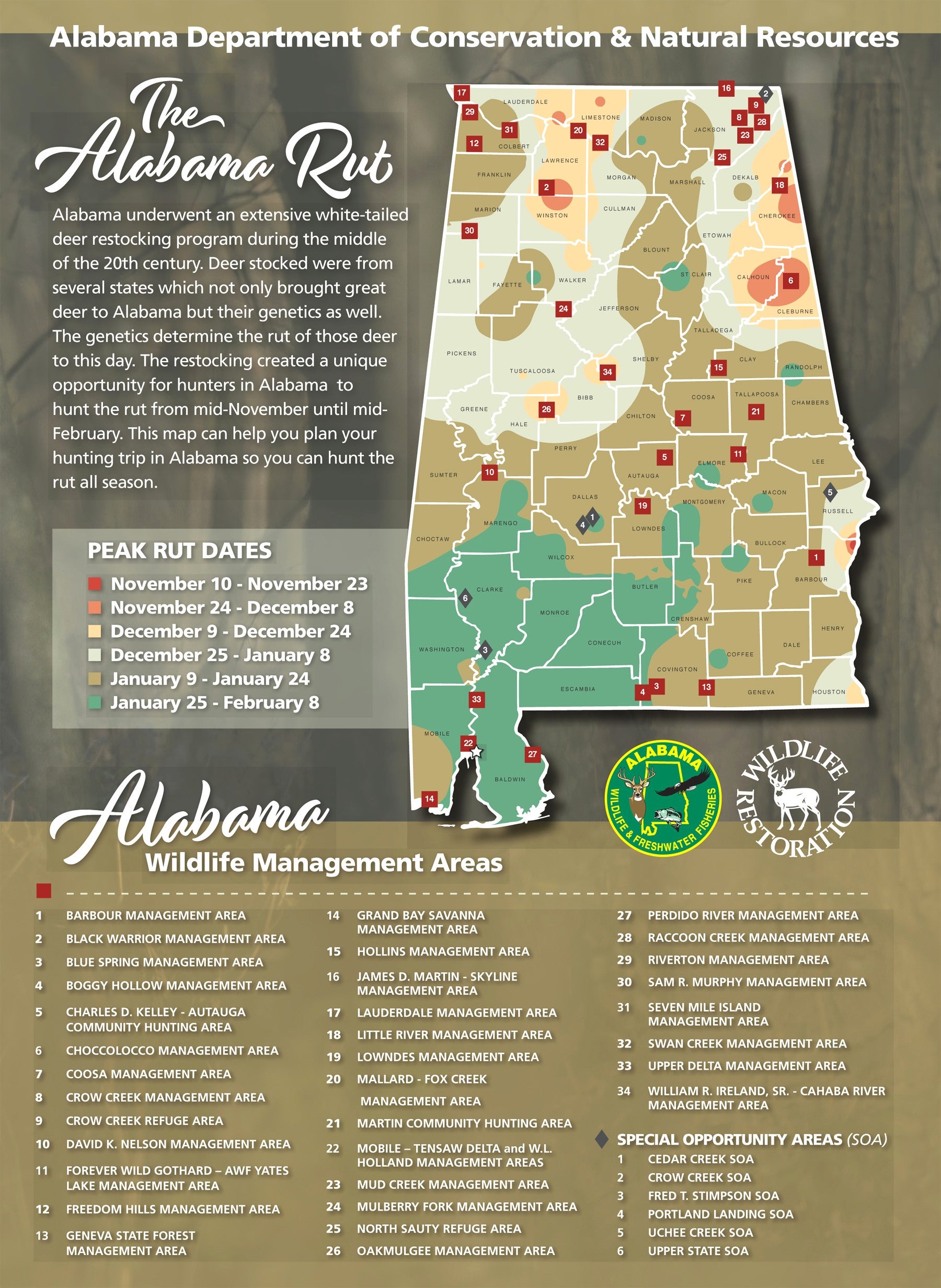
With Alabama’s long deer season, among the longest in the nation, hunters in the state will see plenty of different deer activities during the season. Of course, the one hunters focus on is the rut, the period when does are receptive to the bucks.  

When the rutting activity starts depends on what area of the state you’re hunting.

During the early 20th century, Alabama’s deer herd was overharvested to the point that a restocking was needed to help the species rebound. Restocking efforts included trapping and relocating deer from southwest Alabama, mainly from the Clarke County area, as well as bringing in deer from other parts of the United States. Deer were transported from Arkansas, Georgia, Michigan, North Carolina, Ohio, Texas and Wisconsin.

With that diverse mix of animals from different areas, rutting activity around the state is also considerably variable. Studies by wildlife professionals indicate that rutting activity is most closely associated with the heritage of the deer in a particular area. For the most part, the transplanted deer maintained their native rutting activity, which means Alabama hunters can hunt the rut in one part of the state or another for most of deer season. 

WFF has developed a resource that provides a quick guide for expected rutting activity in your particular area. The Alabama Deer Rut Map, available at www.outdooralabama.com/what-hunt/deer-hunting-alabama, provides a user-friendly way to find the timetable for rutting activity around the state.

For those hunting in the CWD (chronic wasting disease) zones in the northwest corner of the state, mandatory sampling weekends have been set:

High-Risk Zone

  • November 21-22, January 16-17, 2027, February 6-7, 2027. 

Buffer Zone

  • January 16-17 and February 6-7, 2027.

WFF has set up freezers in strategic locations to accept the samples. Visit https://www.outdooralabama.com/cwd-sampling for a list of freezer locations.

Please follow the instructions below to submit your sample:

  • To prepare the sample for drop off at one of the self-service locations, hunters must first remove the deer’s head leaving 4-6 inches of neck attached.
  • Once the head is removed, place it in the provided plastic bag and tie it closed. For bucks, antlers can be removed at the base of each antler or by removing the skull plate before bagging the head. 
  • Complete all sections of the Biological Sample Tag and attach it to the bag with a zip tie.
  • Remove and retain the bottom receipt portion of the Biological Sample Tag before placing the bagged head in the freezer.


Hunters will receive the results of the samples within three to four weeks.

Visit www.outdooralabama.com/seasons-and-bag-limits/deer-season for information about white-tailed deer hunting in Alabama.

###

map

Written by

David Rainer
Outdoor Writer
Back To News