
By Kenny Johnson, Alabama Department of Conservation and Natural Resources
State and federal wildlife agencies, private conservation organizations and landowners have formed an important partnership focused on water quality restoration projects within the Paint Rock watershed in northeast Alabama. Those projects include streambank restoration, barrier removal and cleaning the river through the reintroduction of native mussels.
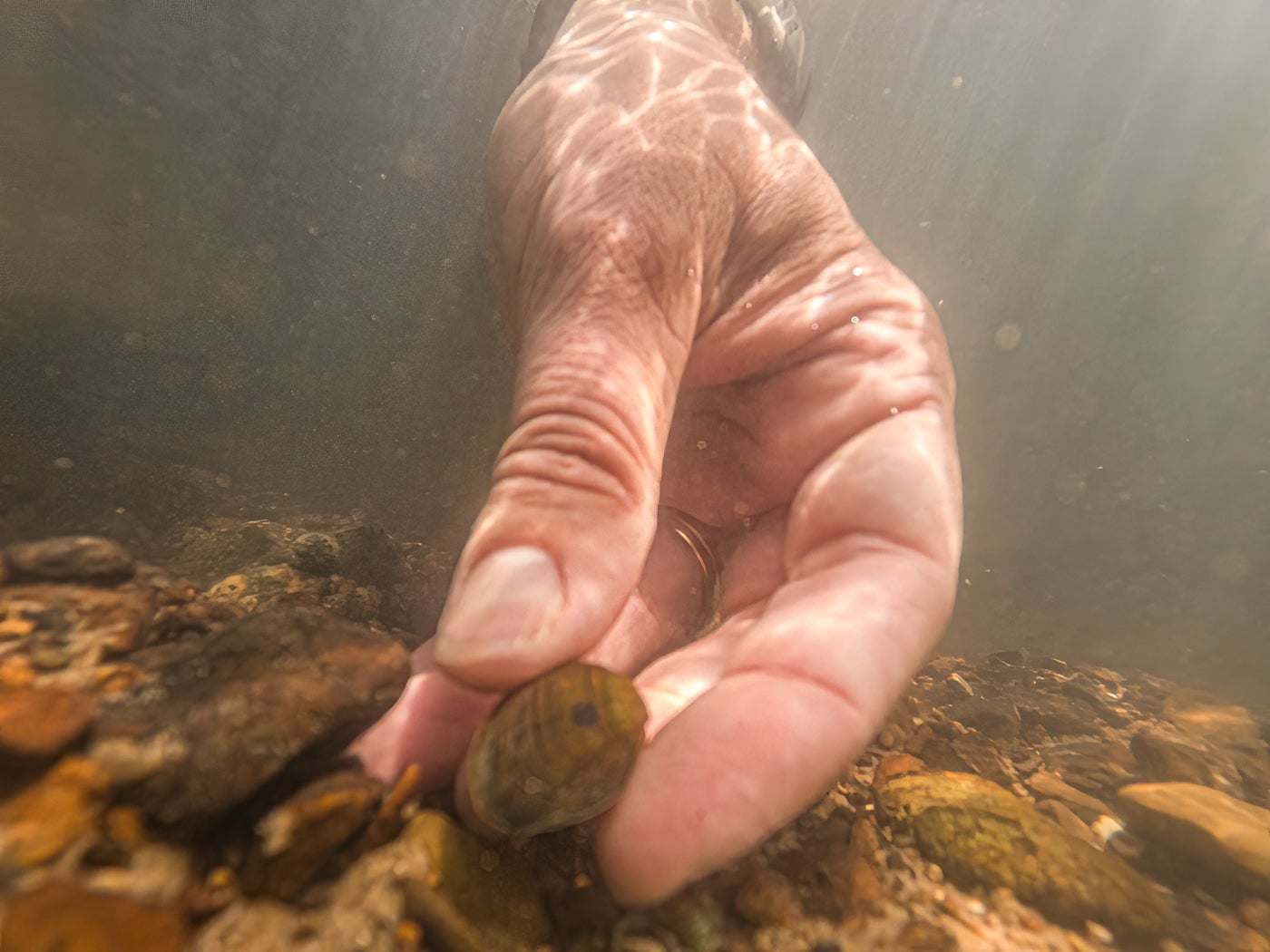
On Tuesday, August 25, 2026, representatives from the Alabama Department of Conservation and Natural Resources (ADCNR), the U.S. Fish and Wildlife Service (USFWS), The Nature Conservancy (TNC) in Alabama, the Alabama Rivers Alliance and the Beagle Charitable Foundation met in rural Jackson County for the release of approximately 1,500 rare native mussels into a section of the Paint Rock River that flows through the property of Huntsville businessman and Alabama Conservation Advisory Board member Raymond Jones, Jr. State Rep. Mike Kirkland and State Sen. Steve Livingston also attended the release.
“Partnerships like this are essential to our mission to conserve the state’s natural resources,” said Chris Blankenship, ADCNR Commissioner. “They bring together knowledge, resources and a shared commitment to protect Alabama’s lands, waters and wildlife. The work they are doing to improve water quality and habitat in the Paint Rock watershed is inspiring and will benefit communities along the river for generations to come.”
Native freshwater mussels and snails are important to healthy rivers and streams because they filter and clean water, recycle nutrients, provide food for other wildlife and help indicate the health of aquatic ecosystems by serving as an early warning system for declining water quality.
Dr. Paul Johnson, Program Supervisor of ADCNR’s Alabama Aquatic Biodiversity Center (AABC), said the Jones property is a showcase site for restoration efforts on the Paint Rock.
“We’re releasing about 1,500 mussels today,” Johnson said. “Two are endangered species, the Pale Lilliput and Tennessee Bean, and one that’s proposed for listing, the Cumberland Moccasinshell. Both the Pale Lilliput and Tennessee Bean were among 20 species of freshwater mussels first listed as endangered by the U.S. Fish and Wildlife Service in 1976. There is a proposed rule for Cumberland Moccasinshell. It remains in only two places in Alabama. This will be the first release of Cumberland Moccasinshell in the middle Paint Rock. These releases are an ongoing attempt to reintroduce the Tennessee Bean and expand Pale Lilliput and Cumberland Moccasinshell in the Paint Rock River.”