
By DAVID RAINER, Alabama Department of Conservation and Natural Resources
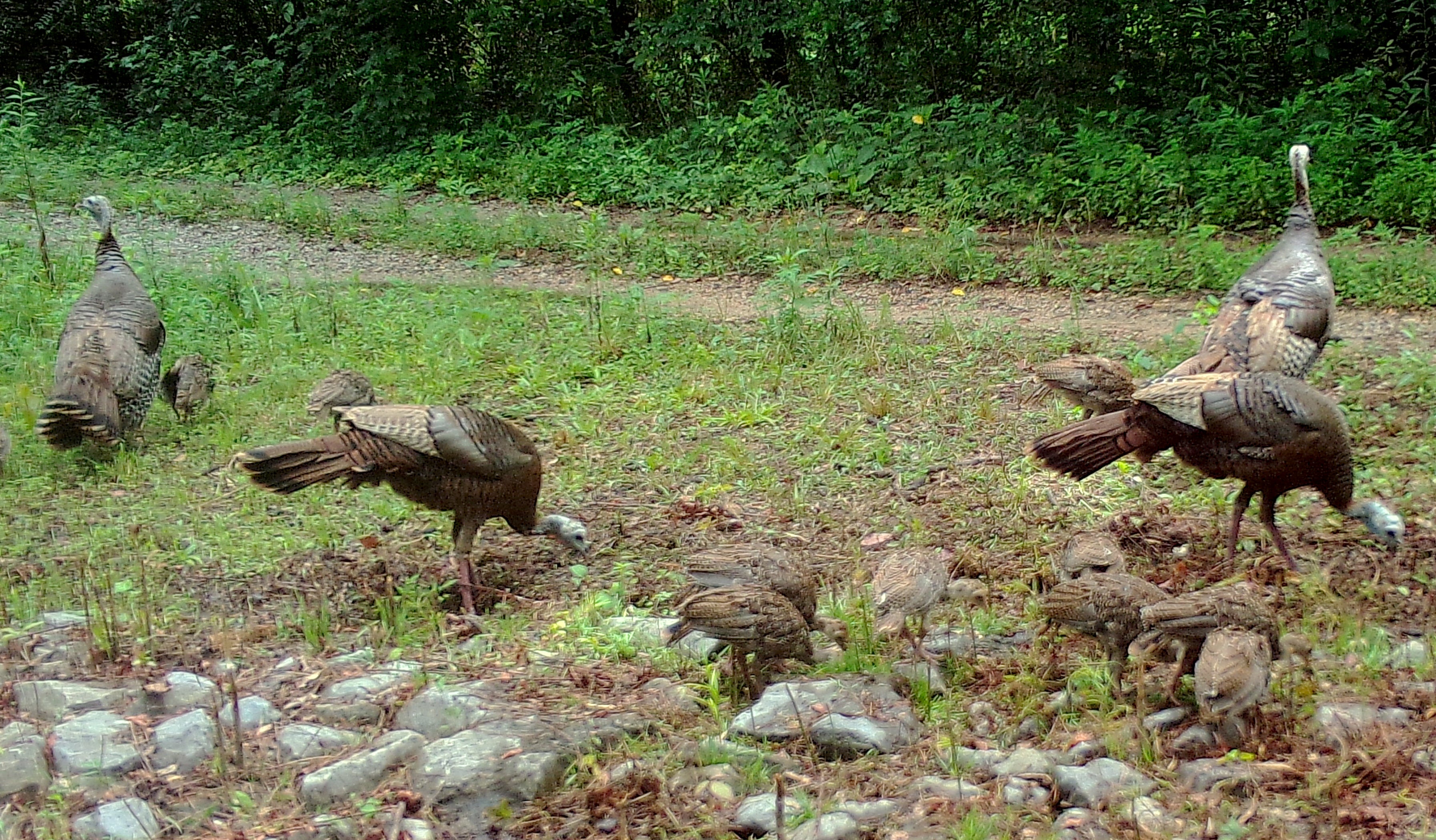
For the first time, the Alabama Department of Conservation and Natural Resources’ (ADCNR) Wildlife and Freshwater Fisheries (WFF) Division is asking the public to participate in the annual wild turkey brood survey, which starts on June 1 and ends on August 31.
Caleb Blake, WFF’s Upland Game Bird Coordinator, said previously the survey participants have been from WFF staff and trusted partners. With the slow decline of turkey populations in the South, WFF is asking for assistance from private citizens to try and gather better data to understand what is affecting those populations.
“We have data back to 2010 from our staff surveys, and in 2019 we partnered with the Southeastern Association of Fish and Wildlife Agencies (SEAFWA) and the National Wild Turkey Federation (NWTF) Technical Committee with its standardized brood survey that is used all over the Southeastern states,” Blake said. “A lot of states have done the survey with staff only. Other states have included private citizens in the survey.
“We’ve been doing it in-house for years, but with the increased concern over the regional trends of wild turkey populations, we want to really increase our geographical coverage so we can better analyze and evaluate regional trends of turkey populations. Including the public will give us a much wider reach as far as sample size and coverage.”
To participate, private citizens can visit www.OutdoorAlabama.com/WildTurkeyBroodSurvey for details on how to report observations and the information WFF needs to track brood sightings. This includes information on submitting the observations online, through the Survey123 field app or by paper form.
“The app is just so much easier,” Blake said. “In the past, we’ve always done a paper survey. People would have a clipboard in their trucks and jot down observations. At the end of the survey, they would take that paper document, go onto our website and enter the data.”
The data came from agency staff and trusted partners in the federal government and conservation organizations that have worked with WFF in the past.
“Now, if they have their mobile device, private citizens can pull up the survey, put in their observations, hit submit, and then they’re done,” Blake said. “Another reason we wanted to include private citizens is that between 93% and 95% of the land in Alabama is privately owned. In order to get the best coverage we can, we want to get the best input we can. If we’re going to have a region-wide recovery, it’s going to take private citizen participation.”
The brood survey essential data includes sightings of gobblers, hens with poults, hens without poults, poults, sighting with unknown identification, and size of the poults. Class 1 is for the youngest poults (6 inches tall or less), class 2 for poults around 10 inches tall, and class 3 for poults six to eight weeks old with an average height of 15 inches.