
By DAVID RAINER, Alabama Department of Conservation and Natural Resources
With about 95 percent of land in Alabama in private ownership, partnerships with landowners and developers are crucial for the conservation of threatened species like the gopher tortoise. That type of collaboration happened recently in Baldwin County when development company 68 Ventures contacted the Alabama Department of Conservation and Natural Resources’ (ADCNR) Wildlife and Freshwater Fisheries (WFF) Division about the discovery of gopher tortoise burrows.
Chloe Kelly, Director of Entitlements with 68 Ventures, is at the forefront of the company’s extensive efforts to ensure environmental compliance, including determining if any sensitive species of animals need attention.
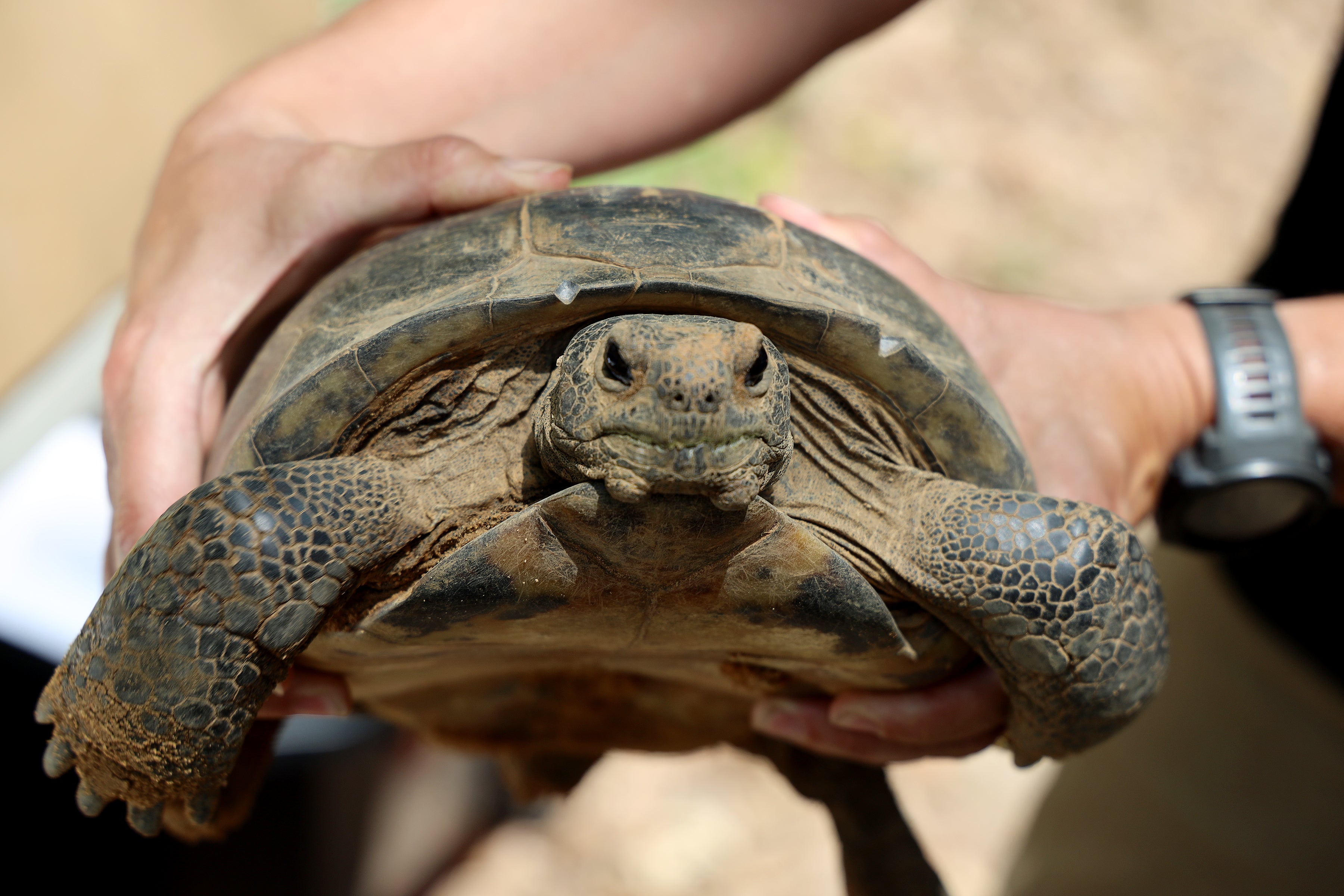
Recently Kelly and team found suspected gopher tortoise burrows at The Reserve, a residential development in Daphne. Kelly said 90 days prior to construction, the environmental team went in, and the burrow site was secured to be sure it was not disturbed. They established a 25-foot buffer to erect a silt fence to encircle the area. WFF was notified and the burrows were surveyed to see if they were occupied. Of the seven burrows discovered, six were occupied by gopher tortoises.
Charlanna Skaggs, ADCNR’s Deputy Commissioner, was invited by WFF’s Amy Silvano, Chief of Nongame Resources and Wildlife Health Section, to witness the relocation of the gopher tortoises from The Reserve to the Perdido River Wildlife Management Area (WMA) in east Baldwin County. She came away with a lasting impression.
“I had never joined any of our relocation activities with tortoises before,” Skaggs said. “I was able to watch the environmental team and their contractor do their work. When I learned that it was a local contractor, 68 Ventures, I contacted them through a mutual friend to compliment the great job they did.
“It was fascinating to watch the equipment operator carefully remove the dirt. The gopher tortoise burrows were 8 feet deep. For them to be able to trace those all the way down and carefully remove the dirt from the top of the burrow was impressive. When the tortoises came out, they were perfectly fine and healthy.”
Silvano and team weighed and measured each tortoise and prepared them for transfer.
Considered a keystone species of the longleaf pine ecosystem, the gopher tortoise is crucial for the survival and health of a variety of animal species, including the federally threatened Eastern Indigo Snake. In fact, more than 360 species of mammals, birds, reptiles, amphibians and invertebrates are known to spend all or a portion of their lives in either active or abandoned gopher tortoise burrows. Therefore, preserving gopher tortoises receives high priority for WFF’s Nongame Section.
“It was great to see this group responsibly collect and preserve them,” Skaggs said. “This is what (ADCNR) Commissioner (Chris) Blankenship talks about all the time – being able to balance our work with economic development, to balance conservation with business. This neighborhood was able to go in, but we were also able to conserve and protect those threatened species.”